

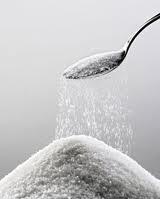
Everyone knows sugar is bad for you.
The journey to a healthier lifestyle almost certainly begins with the elimination of the processed white stuff. . . it’s really a no brainer.
But is it? Maybe . . .
Before diving into the wonderful world of alternative sweeteners, let’s look at why sugar gets such a bad rap. The short answer is; it is high in calories, lacks nutrients, and is pure carbohydrate.
The longer answer is that too much sugar (specifically fructose) can not only lead to obesity, but also diabetes, dementia, heart disease, and even certain types of cancers.
The key words here are “too much”.
I like what Dr. Andrew Weil says on his website: “The problem with … sugar is not that [it is] ‘bad’ for you, but that we eat far too much of [it].”
To maintain a healthy diet, men should eat no more than 6 teaspoons per day and women should eat no more than 5 teaspoons. With the average American downing 22 teaspoons per day, it is easy to see why sugar has become public health enemy #1 . . . and why finding an alternative might be a good idea, even for someone who does not want to lose weight and/or does not have Diabetes.
So now we’ll take a look at the dizzying array of sugar substitutes available.
I would say there are two basic types of sweeteners: artificial and natural, with a few sub-categories under “natural”. Important tip when discussing sweeteners . . . “natural” does not mean “healthy”. The regular refined white sugar we are trying to replace actually falls into the natural category. It is highly processed – but still natural.
Artificial sweeteners are man-made synthetics. Studies are showing what many have suspected for years; the body just does not know what to do with synthetic “foods”. From margarine to Egg Beaters to Sweet’NLow, these substances are causing weight gain and inflammation. Although their link to cancer is still “inconclusive”, aspartame (NutraSweet, Equal, Sugar Twin) has been associated with headaches and sucralose (Splenda) is attached to chlorine and kills bacteria in the bowels.
My personal feeling about artificial sweeteners is . . . why? With so many better alternatives for both dieters and diabetics . . . why use these substances which might not kill you . . . but then again, they might!
The next category of sweeteners are the naturally occurring, un-processed (or less processed) sugars. While many prefer these sugars because they sometimes contain vitamins and minerals (addressing the “empty calorie” problem), most have even more calories and fructose than processed white sugar! Examples of these not very healthy natural sweeteners are agave nectar (low glycemic, but 90% fructose), molasses (high calories), all the syrups (barley, malt, brown rice, cane, corn, golden, maple – some are better than others, but most are high in fructose, calories, and the glycemic index), honey (high calorie, high glycemic), and coconut sugar (low glycemic, but same calories as the white stuff @ 3x the cost).
All in all, these natural sweeteners are definitely better for you than artificial, and probably better for you than the processed white stuff, but should be used with just as much moderation (ie. 5 – 6 teaspoons per day) . . . and none of these is really suitable for a person with diabetes.
The next category of natural sweetener is sometimes called “dietary supplements”. These two sweeteners show good potential for reducing calories and fructose . . . Stevia – low calorie, zero glycemic (Truvia, PureVia) and Monk Fruit – zero calorie, zero glycemic (Nectresse). These brand names are blended with other sugars, but many health food stores carry pure versions. Of the two, Nectresse tastes more like sugar.
And last, but not least are the sugar alcohols. Many of these natural sweeteners are found in other products and end with “-ol”. Only two are commercially available; erythritol (no calorie, very low glycemic) and xylitol (reduced calorie, low glycemic, tastes and behaves the most like sugar for baking).
So, to wrap up this Sugar Bowl . . .
- Everyone should definitely reduce their fructose intake to 5 or 6 teaspoons per day. There may be some health advantage to using the less processed sugars, but the research does not really support that theory. There are some who even claim that the less processed sugars contain more contaminants and are less healthy. . . so get the facts about whatever product you choose and use common sense. I’ve used pretty broad categories – the less processed natural sweeteners in particular vary quite a bit in value. You may also want to consider the acid/alkaline levels or reported health benefits of some of them (honey, for instance can be very beneficial, despite the calories).
- If you have diabetes and/or you struggle to limit your intake of sweets to 5 or 6 teaspoons, it would probably be a good idea to use one of the “supplements” or sugar alcohols. Stevia, Monk Fruit, Erythritol and Xylitol are all healthy substitutes for sugar. Buy all of them and experiment with your own recipes and see what works for you. (And let me know, of course)
This is a just a simple overview of the sugar subject. A person with diabetes, for instance, would need to learn exactly what the glycemic index is and how to look up the glycemic load of foods they eat. A person who wants to loose weight would want to have a better understanding of calories and how they affect weight gain and loss. But for the average American attempting to improve their eating habits, this is a good place to start.
 RSS - Posts