

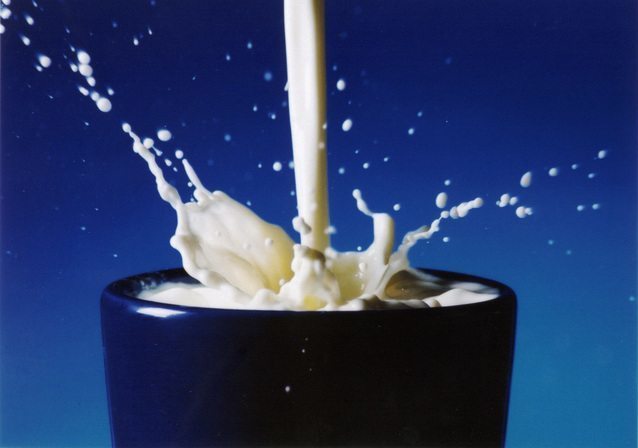
For the purposes of this post, I am only considering the question of cow’s milk consumption in humans past the age of 8 years.
The issue of milk consumption has festered into one of the most controversial and contentious in all nutrition-dom! It was a little scary wading into these waters.
It seems that every nutrition-based guru or faction has its own take on the debate; except vegans, of course. They are fortunate enough to sit this one out!
But for the other (roughly) 90% of us, the milk issue can be mind numbingly complex. At times science even adds to the confusion . . . contradiction and lack of unity can bewilder the searching soul trying to make healthy choices.
I bravely delved into the science and the claims, hoping to make some sense of it all. Let’s see what I came up with.
IS MILK NECESSARY?
I was surprised to discover only 35% of the earth’s population produces the enzyme lactase, which enables digestion of the milk sugar lactose.
So, doing the math . . . 65% of humans are “lactose intolerant!”
That name sounds like a defect, doesn’t it? Normal people drink milk, but some can’t due to lactose intolerance (use ominous voice).
But the opposite is true…the lactose tolerant are the minority.

Early dairy-guzzlers did gain dominance because of their milk drinking abilities (it was an easy, steady source of protein), but if 65% of humans can’t tolerate milk as a beverage – maybe its critical role in a well-rounded diet has been overstated.
“To the best of my knowledge, we have no evidence — zero — that adding dairy to balanced, prudent vegan diets improves health outcomes in any way. On the other hand, we also have no evidence to my knowledge that such optimized vegan diets produce better health outcomes than comparably balanced, optimized Mediterranean diets that do include dairy.” – Dr. David Katz
So, no – milk is not necessary. Balanced diets are necessary.
WHY DRINK MILK?
Let’s consider the benefits associated with our contentious beverage.
Milk contains:
- Beneficial macronutrients
- High quality proteins
- Many vitamins & minerals, including highly absorbable calcium
These facts led nutritionists and physicians to recommended milk for overall health and for building strong muscles (protein) and bones (calcium) for decades.

The highly absorbable calcium found in milk may be the most cited benefit of milk. However, other natural foods contain the coveted mineral. The lactose intolerant can often tolerate calcium rich yogurt and cheese (humans ate yogurt and cheese long before they started drinking milk). Sardines and dark green vegetables (spinach, kale, turnips, collard greens, arugula, broccoli) abound with calcium – although getting kids (and more than a few adults) on board with these might be tricky. Fortunately, some more popular food sources include oranges, sesame seeds, sunflower seeds, almonds, soybeans, salmon, white beans, and figs.
Many breads and cereals are “fortified” with calcium, which is fine, but I wouldn’t classify it as a “natural” food source.
If you just can’t get enough calcium from food (and most people – even milk drinkers – require more calcium than they ingest), then a high-quality supplement will fill the gaps.
Be careful though. Nutritional supplements can do more harm than good if they contain harmful filler ingredients, pesticides, and other contaminants. And no value can be gained unless the vitamins and minerals are bio-available (in a form that the body can absorb and use). And finally, high-quality, bio-available supplements should be used in sensible quantities in concert with a balanced diet.
MILK AND BONE DENSITY
Recent studies show high milk consumption does not ensure strong bones…in fact, incidents of osteoporosis and bone fractures seem highest among populations who drink the most milk and lowest among those who don’t drink milk at all.

It is a mystery. No one knows why. Theories abound with no concrete evidence.
Headlines respond by proclaiming calcium to have no effect on bones, and can even cause a host of health problems! Headlines are notoriously sensationalized.
The fact is, calcium and vitamin D together increase bone density. Vitamin D maintains constant blood levels of calcium by either depositing excess calcium in the bones or leaching it from the bones. And this fact remains true – even if large doses of milk do not guarantee strong bones.
Milk, of course, is only one source of calcium (as noted above) and cannot be relied on as the only source of vitamin D. Considering 65% of the US population can be classified as Vitamin D insufficient and 4% as severely deficient, the results of these studies make some sense. I mean, without the vitamin D, how can the calcium strengthen the bones?
Still, why would drinking more milk actually increase the risk of fractures? I don’t fully understand the findings and would like to see some better research and explanation before drawing a definite conclusion. I think it is highly unlikely and way too early to conclude milk is bad for your bones.
MILK AND HEART DISEASE
The very old and long disproved claim that saturated fat in milk contributes to heart disease manages to remain at large.

Most studies indicate milk improves cholesterol levels and 2 – 3 glasses per day lowers the risk of heart attack and stroke.
We continue to see the saturated fat = heart disease claim because saturated fat = high cholesterol and high cholesterol = heart disease. However newer studies reveal the high cholesterol = heart disease paradigm isn’t as solid as once believed. They have found the type of fat causing the high cholesterol far more significant to the development of heart disease.
Current studies actually show saturated fats and monounsaturated fats have no effect on heart disease, and trans-fats are the only fats (as a group) to increase the risk of heart disease.
Omega 6 polyunsaturated fats as a group have a net zero effect on heart disease as well; although within that group, palmitic & stearic acid (found in palm oil and animal fats) increase risk while margic acid (found in dairy) decreases risk to the same degree.
Long-chain omega-3 polyunsaturated fats (as a group) significantly decrease the risk of heart disease…but within the group alpha-linolic acid (found in vegetable oils and nuts) has no effect on heart disease while EPA and DHA (found in fish and supplements) decrease the risk by 20 – 25%.
Confusing? Maybe a chart will help:

MILK AS A DEADLY POISON
Anti-milk claims abound: milk is for baby cows, not fit for humans…it causes cancer, diabetes, allergy, asthma, eczema, inflammation, weight gain, infertility, and neurodegenerative disease.

I will not say the claims have no studies to back them up . . . they do, but I could not find any research which I consider credible to substantiate them. Of course, the powerful milk industry could be keeping the real research from the public. And, if the claims cause concern…don’t drink the milk. It’s not critical to overall health (see is milk necessary above). Just be sure to consume plenty of calcium and vitamin D.
Stay tuned for Part II next week – we will look at milk options and non-dairy alternatives.
 RSS - Posts